

- HOME
- Swim with wild dolphins in Japan! Vol.3 mikurajimas


New series
Swim with wild dolphins in Japan!
Vol.3 Let’s Go Meet the Dolphins of Mikurajima!
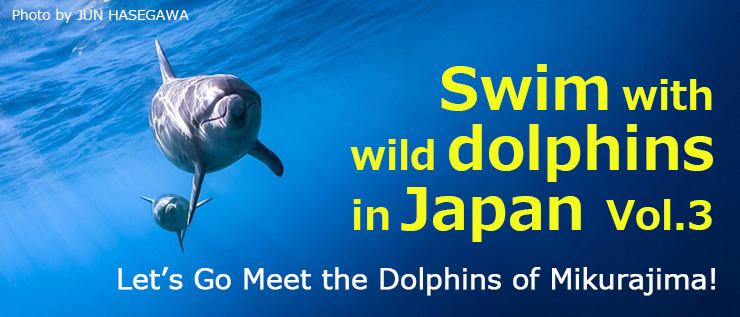
This series by Jun Hasegawa explores destinations across Japan where you can encounter dolphins, with a special focus on places where you can swim with wild dolphins. Richly illustrated with photos and videos, it’s a guide for anyone who has ever dreamed of swimming with wild dolphins, even just once in their life. If that dream is on your bucket list, Japan is the place to go!
※Information as of September 2025
Hello! I’m Jun Hasegawa, a freediving tour guide. In this article, I’d like to introduce Mikurajima (Mikurashima Island), Japan’s “holy grail” of dolphin swimming. Mikurajima is not the easiest place to reach, largely because of its remote location and challenging sea conditions. But the island’s spectacular nature and the dolphins that live around it are so captivating that you’ll find yourself wanting to make the journey despite the effort it takes to get there. The dolphin encounters around Mikurajima are truly world-class—not only in terms of the chances of seeing dolphins, but also their remarkable friendliness toward swimmers. Before we get into the details, take a look at this video to get a feel for what dolphin swimming around Mikurajima is really like.
All of this—and more—is possible on a two-day, one-night trip, with three dolphin swims!
Swimming with Dolphins at Mikurajima (May 10–11, 2023)
- ▼Let’s Go Meet the Dolphins of Mikurajima!
- ▽What is Mikurajima like?
- ▽How to Get to Mikurajima
- ▽Accommodation Reservations
- ▽Dolphin swim boat reservations
- ▽Ferry reservation
- ▼Planning a trip unique to Mikurajima
- ▽Plan 50% More Trips Than You Actually Need
- ▽Take One Extra Day Off Work
- ▼Dolphin Swimming in Mikurajima: What to Expect
- ▽About the Dolphins of Mikurajima
- ▽Dolphin Swimming in Mikurajima: An Overview
- ▽Dolphin Swimming: Procedure, Safety, and Rules
- ▼Summary
Ready to go? Let 's go to Mikurajima!
What is Mikurajima like?
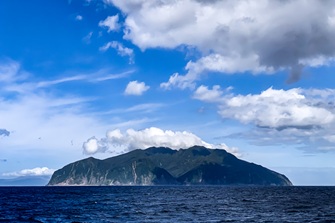
View of Mikurajima from Miyakejima (Oct. 24, 2016)
Photo by JUN HASEGAWA
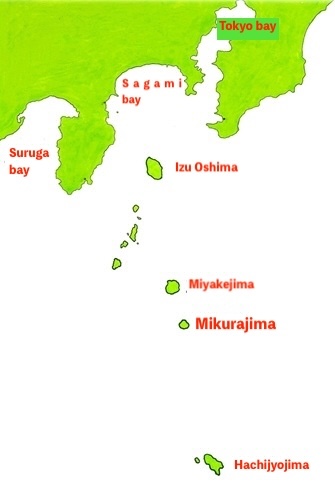
Mikurajima (Izu Islands,Tokyo) is a small island with a circumference of approximately 16 km,located about 200 km south of central Tokyo. Surrounded by sheer cliffs, the island’s only inhabited area is the northern settlement where the port is located. It has a population of around 300. Most of the island is covered in pristine forest, and more than 90% of its land area is designated as a protected area. As a result, access to most parts of the island is restricted unless accompanied by a local guide. Forestry was once the island’s industry, but today, tourism-----particularly dolphin swimming---- is a the mainstay of the local economy.
How to Get to Mikurajima
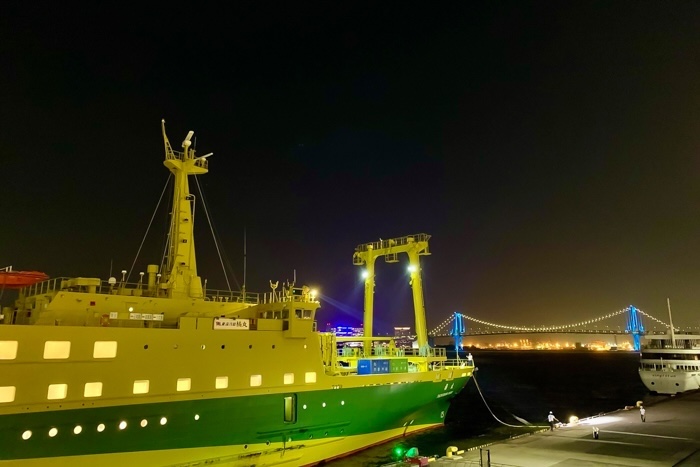
The Tachibana Maru waiting to set sail at Takeshiba Pier
Photo by JUN HASEGAWA
The main way to get to Mikurajima is aboard the Tachibana Maru, a large passenger ship operated by Tokai Kisen that departs from Takeshiba Pier in Tokyo. It leaves Tokyo every night, stops at Miyakejima along the way, and arrives at Mikurajima the following morning. The return journey leaves Mikurajima around noon and arrives at Takeshiba Pier in Tokyo that evening.
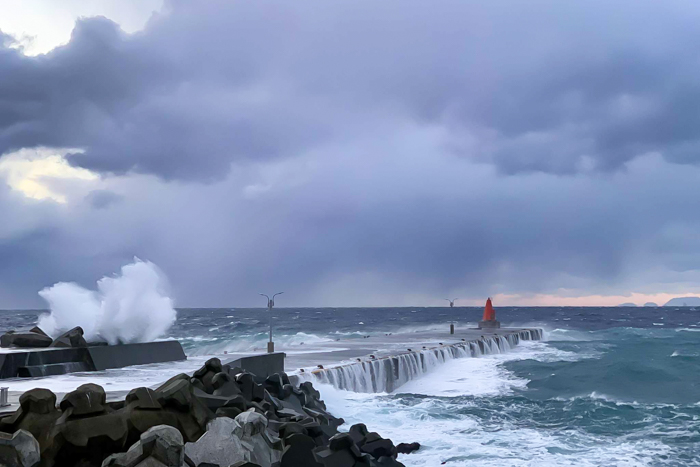
The Mikurajima Pier Amid Rough Seas (January 8, 2021)
Photo by JUN HASEGAWA
Because Mikurajima’s only port faces the open ocean, even relatively rough seas can prevent passenger ships from docking, resulting in cancellations. During the dolphin-swimming season, the average docking rate is around 60%. Incidentally, because the Tachibana Maru also serves other islands, it may leave Tokyo even when there is a possibility that it will not be able to dock at Mikurajima. In such cases, the voyage is considered a “conditional departure.” A “conditional departure” essentially means: “There is a possibility that we may not be able to reach Mikurajima, but if you are willing to take that risk, please board the ship.” But even if the ship cannot dock at Mikurajima on the outbound journey, don’t give up just yet! There is still a chance that the ship will be able to stop at Mikurajima on its return journey from Hachijojima, the final port of call beyond Mikurajima, to Tokyo.
Accommodation Reservations
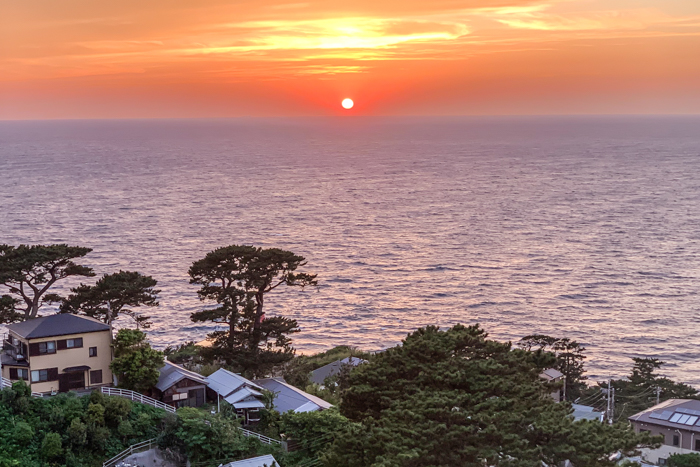
Sunset Viewed from a Lodge on Mikurajima (May 2, 2022)
Photo by JUN HASEGAWA
Mikurajima has a limited number of accommodations and a relatively small overall capacity, so finding a place to stay can be highly competitive during the dolphin-swimming season. Not only are the popular Golden Week and Obon holiday periods difficult to book, but even regular weekend stays often fill up as soon as reservations open, typically two to three months before the intended stay (Accommodations that are easy to book from overseas). For accommodations that use a lottery system, be sure to enter the lottery as soon as applications open. For those that accept reservations on a first-come, first-served basis, make sure you are ready to call at exactly the date and time reservations open. Planning ahead is essential!
Dolphin swim boat reservations
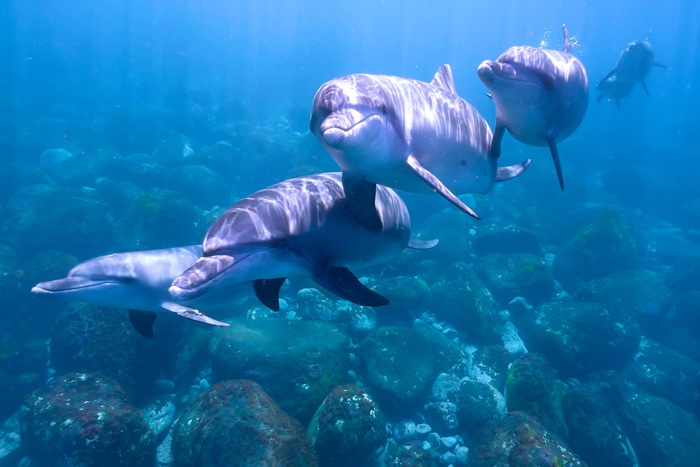
Dolphins approaching (May 10, 2023, Mikurajima)
Photo by JUN HASEGAWA
The dolphin-swimming boats available to you depend on where you stay. Some accommodations operate their own dolphin-swimming boats, which you can book at the same time as your accommodation. Other boats must be booked separately from your accommodation, so it’s not uncommon to end up with a room but no place on a dolphin-swimming boat—or a spot on a boat but nowhere to stay! If this happens, put your name on the waiting list and be patient. You may get lucky when a room or a seat becomes available!
Ferry reservation
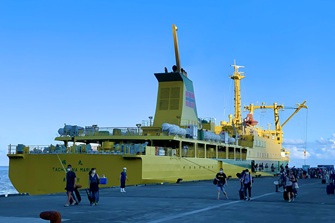
Disembarking scene from the Tachibana Maru
Photo by JUN HASEGAWA
Reservations for boarding passes become available online from midnight on the same day two months prior to the boarding date. During peak seasons such as Golden Week and weekends during the summer holidays, we strongly recommend making your online reservation exactly at midnight. Even on weekends outside of peak seasons, it's best to make your reservation as soon as possible after reservations open to ensure availability. Incidentally, boarding passes can also be reserved by phone.
Planning a trip unique to Mikurajima
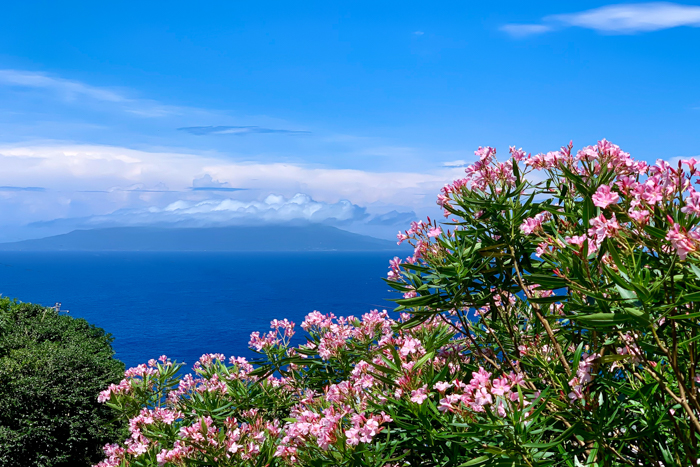
View of Miyakejima from Mikurajima Village
Photo by JUN HASEGAWA
By now, I hope you have a better idea of what I meant at the beginning when I said that Mikurajima is “not the easiest place to reach.” So, how do experienced dolphin swimmers deal with this challenging island? Here are some of the tricks that repeat visitors use to make their trips to Mikurajima a little more reliable.
Plan 50% More Trips Than You Actually Need
Since rough seas can prevent you from reaching Mikurajima, it’s a good idea to make travel plans for multiple dates, assuming that some of them may have to be canceled. As a rule of thumb, I plan for about 1.5 times as many trips as I actually want to take. For example, if I want to visit Mikurajima twice a year, I make plans for three trips.
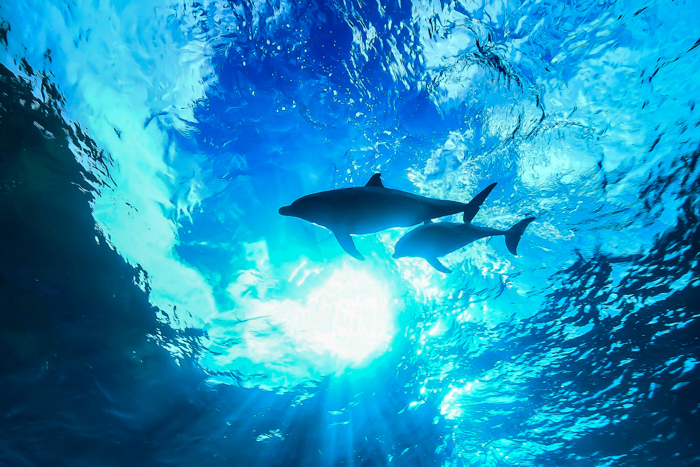
The sea and sky merge together (October 4, 2024 Mikurajima)
Photo by JUN HASEGAWA
Take One Extra Day Off Work
Because there is always a possibility that the return ferry will be canceled, I recommend taking one extra day off work beyond your planned travel dates.
When the forecast is borderline as to whether the passenger ferry will be able to dock at Mikurajima, you will usually hear from your accommodation or the captain of your dolphin-swimming boat with a message like, “The ferry might not be able to dock. What would you like to do?” If the chances of docking are particularly low, they may simply tell you, “We recommend canceling the trip.” Needless to say, the safest option is to play it safe and cancel when you receive a message like this. But if you’re thinking, “I went through all that trouble to get a spot on a dolphin-swimming boat—I don’t want to give up that easily!” and you can arrange an extra night’s accommodation, extending your stay and taking your chances is another option.
Dolphin Swimming in Mikurajima: What to Expect
About the Dolphins of Mikurajima
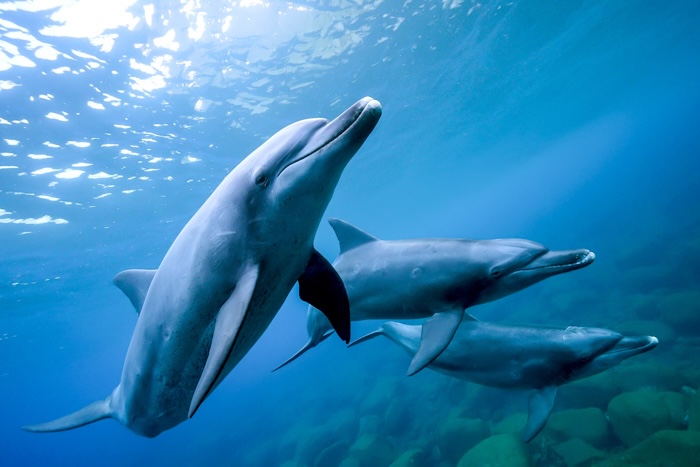
The Indo-Pacific Bottlenose Dolphins of Mikurajima
Photo by JUN HASEGAWA
Around 150 Indo-Pacific bottlenose dolphins are resident in the waters around Mikurajima. The Indo-Pacific bottlenose dolphin is a medium-sized species found mainly in the warm coastal waters of the Indian Ocean and western Pacific. In Japan, resident populations have been documented in several locations, where dolphin-watching tours and dolphin-swimming activities are offered.
Many of these dolphins are naturally curious and unafraid of humans, with some individuals readily approaching swimmers. This makes them one of the dolphin species particularly well suited to dolphin swimming.
Dolphin swimming for tourism began around Mikurajima in 1994, and several thousand “dolphin swimmers” visit the island each year. Perhaps because they encounter humans so frequently, the dolphins around Mikurajima seem to be more accustomed to people than Indo-Pacific bottlenose dolphins in other regions.
According to dolphin-swimming guides who have swum with dolphins in oceans around the world, the dolphins of Mikurajima are just as comfortable around humans as those in the Bahamas, one of the world’s most famous destinations for swimming with wild dolphins.
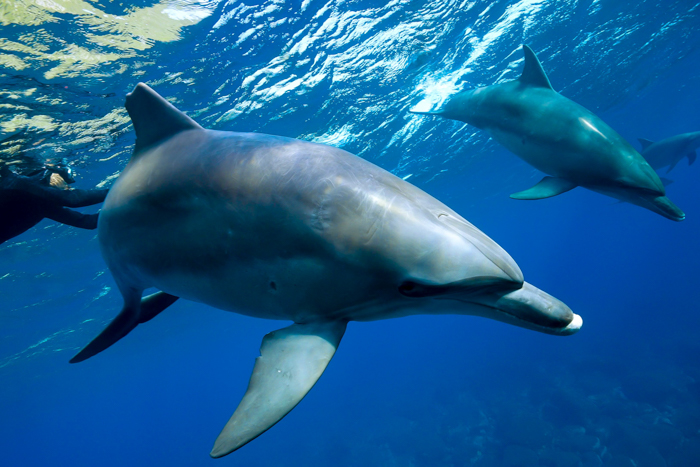
Joe the dolphin with a torn dorsal fin (October 27, 2023 Mikurajima)
Photo by JUN HASEGAWA
It is not known exactly when the dolphins first began settling around Mikurajima, or why they chose these waters. One theory is that, because the seas around the island are often rough and Mikurajima is surrounded by sheer cliffs with no sheltered bay, fishing was never a viable livelihood for the island’s residents. As a result, the dolphins may have gathered here because they faced little risk of being chased away by fishermen.
Because the same group of dolphins can be observed continuously over many years, Mikurajima has also become an important research site for Indo-Pacific bottlenose dolphins. Researchers and volunteer surveyors identify individual dolphins, and many have been given distinctive names based on their individual characteristics—including dolphins such as “Joe.”
Dolphin Swimming in Mikurajima: An Overview
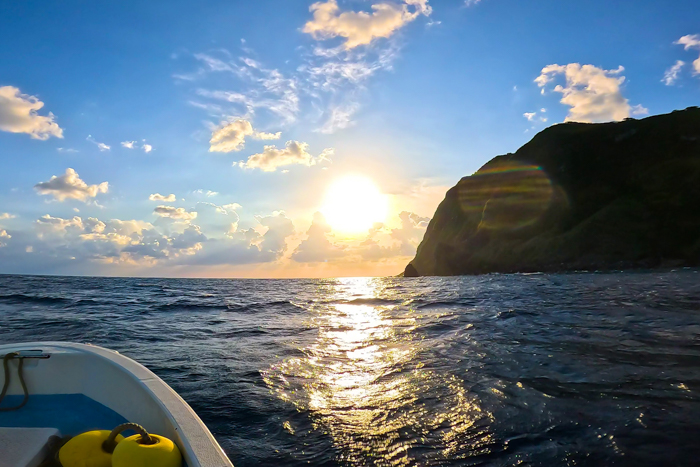
Sunrise from a dolphin-swimming boat (October 28, 2023 Mikurajima)
Photo by JUN HASEGAWA
Dolphin swimming around Mikurajima typically involves heading out in a small fishing boat, cruising around the island in search of dolphins, and then getting into the water to swim with them by snorkeling or freediving. When sea conditions are good enough to make a full circuit of the island, the chances of encountering dolphins are almost 100%. The dolphin-swimming season runs from mid-March to mid-November. Tours operate twice a day, once in the morning and once in the afternoon, with each trip lasting around two hours. The number of times you can enter the water is limited to a maximum of eight per tour. One thing to keep in mind is that the seas around Mikurajima are often rough, and the dolphin-swimming boats can rock quite a bit even on relatively calm days. We recommend taking motion-sickness medication, even if you have never experienced seasickness before.
Dolphin Swimming: Procedure, Safety, and Rules
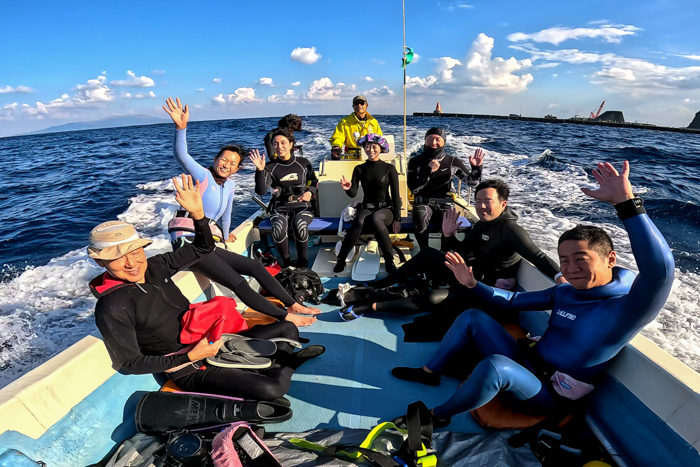
Morning on a dolphin-swimming boat (October 28, 2023 Mikurajima)
Photo by JUN HASEGAWA
At last, it’s time for the exciting part—the dolphin swim itself! Here, I’ll explain how the swim works, along with some important safety points and rules to keep in mind. After boarding the dolphin-swimming boat at the port and heading out to sea, you’ll cruise around the island in search of dolphins. Before long, you may spot several dorsal fins appearing and disappearing among the waves ahead of the boat. It’s a pod of dolphins! But even when you spot dolphins, never enter the water without the captain’s instruction. The captain will tell you when it is safe to enter.
First, put on your mask, fins, and other gear, then wait for the captain’s instructions. When the captain calls out, “Enter from the right side!” or “Enter from both sides!”, carefully step over the side of the boat and enter the water quietly. The area behind the boat is extremely dangerous because of the propeller, so never swim around to the back of the boat.
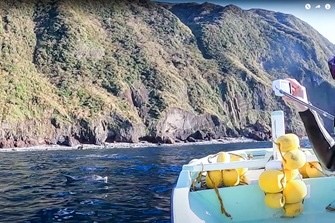
Dolphin watching from a boat
Photo by JUN HASEGAWA
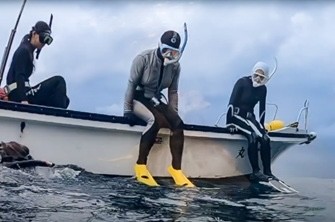
Entry from the dolphin swim boat
Photo by JUN HASEGAWA
Once you’re in the water, if you can see the dolphins at the surface, swim in the direction they are heading. If they have disappeared underwater, look beneath the surface to figure out which way they are moving. If you can’t spot the dolphins for a while, occasionally lift your head and look toward the captain. The captain may be trying to tell you something like, “They’re coming from that way!” It can also be helpful to watch the other swimmers. Their movements can often give you a clue as to where the dolphins are heading.
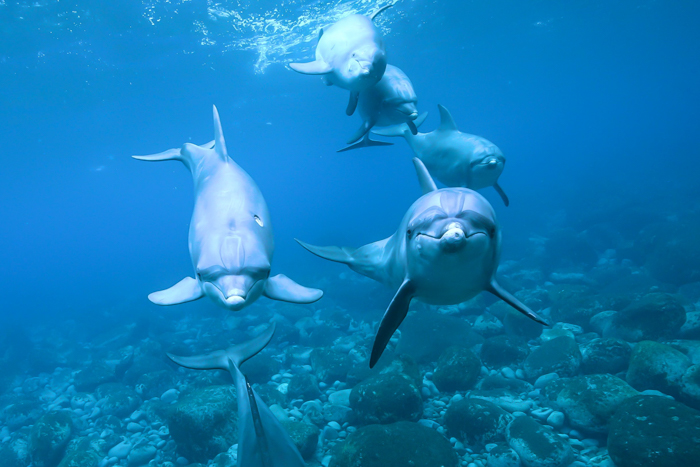
Dolphins showing interest in humans and approaching them (November 13, 2022 Mikurajima)
Photo by JUN HASEGAWA
When a dolphin approaches you underwater, the swim can finally begin! To help protect the dolphins, please follow the rules below, established by the Mikurajima Tourism Association. By respecting these guidelines, we can enjoy swimming with the dolphins while keeping our encounters safe and respectful.
-Do not touch the dolphins or attempt to touch them.
-Do not feed the dolphins.
-Do not approach groups of dolphins that include young calves.
-Do not interfere with the dolphins’ natural behaviors, such as feeding, mating, or giving birth.
-Do not use a flash when taking photos or videos underwater.
-Do not use equipment that produces artificial sounds, such as whistles or diving computers.
-Do not bring selfie sticks into the water.
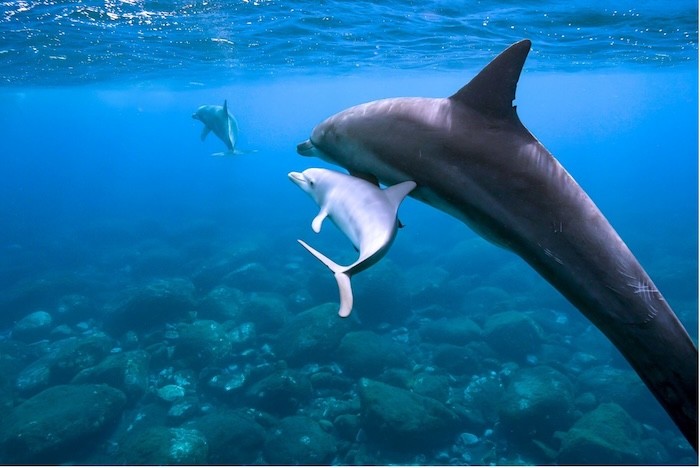
Baby dolphin swimming close to its mother (May 11, 2023 Mikurajima)
Photo by JUN HASEGAWA
The mother and calf in the photo above were kind enough to approach us on their own. Even in a moment like this, resist the temptation to move closer and simply observe them calmly and respectfully. Once a pod of dolphins moves on, don’t chase after them. Instead, lift your head out of the water and wait for the captain’s instructions. When the ladder is put over the side of the boat and the captain calls out, “Let’s get back on board!”, swim promptly toward the boat and climb aboard, taking turns and giving others space. Once everyone is back on board, the boat may approach the same pod again, or the captain may look for another pod. If a pod does not approach us in the water, it is generally left alone rather than being approached again, and the boat moves on in search of another pod.
Summary
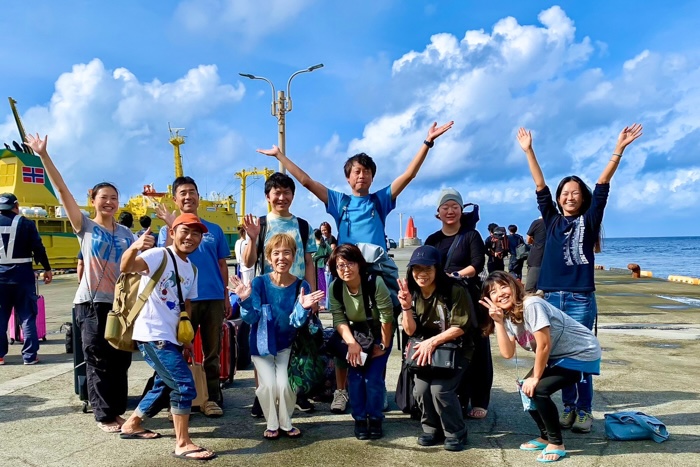
One Last Photo Before Boarding the Ferry Home
I hope you now have a good idea of what a dolphin-swimming trip to Mikurajima is like! Getting to this unique island can be challenging, but once you experience the thrill of swimming with its wild dolphins, you’ll probably find yourself thinking, “I definitely want to come back!” In fact, many people who visited Mikurajima saying, “I just want to swim with wild dolphins once in my life,” end up becoming repeat visitors. Every encounter with the dolphins is different, and so is the face of Mikurajima’s beautiful nature. That’s part of the fun! So why not visit Mikurajima at least once and take your first step into the wonderful world of dolphin swimming? If you’re not confident about traveling there on your own, joining a tour organized by a dive shop is another great option. I hope to see some of you on Mikurajima someday! Next time, I’ll take you to the Ogasawara Islands and introduce you to the world of dolphin swimming there. Stay tuned!
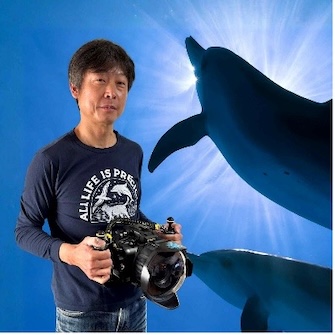
Diving guide and conservationist
JUN HASEGAWA
He is a tour guide at Dive Station Base, a diving shop specializing in freediving and dolphin swimming. His life's work is to convey the beauty and enjoyment of the ocean, as well as environmental issues, using video, photography, and writing. Since his first experience with scuba diving and skin diving in the Ogasawara Islands in 1992, he has been completely captivated by the allure of the sea. In 1997, he began going to Mikura Island for dolphin swimming and became fascinated by the charm of dolphins. At the end of 2022, he retired from the science museum where he had worked for many years and embarked on a career as a diving guide. In 2016, together with dolphin swim guide Yuki Kusachi, he established the "Volunteer Group to Protect Mikura Island's Streaked Shearwaters," and is engaged in activities to capture and rehome feral cats on Mikura Island that prey on birds.
>>Swim with Wild Dolphins Tour by Dive Station Base