

- HOME
- Swim with wild dolphins in Japan! Vol.1


New series
Swim with wild dolphins in Japan!
Vol.1 Types of dolphins you can see in Japan
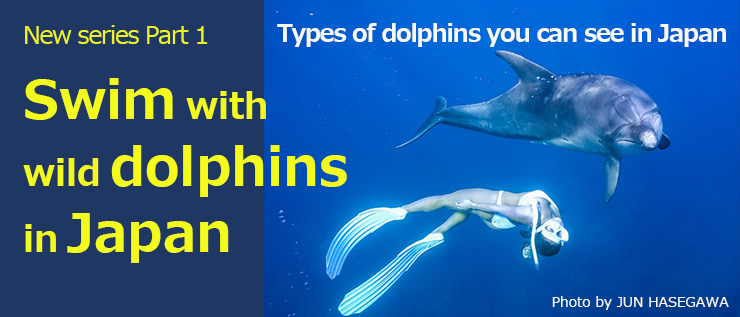
There are areas in Japan where you have a high chance of encountering wild dolphins and even swimming with them. Jun Hasegawa, a dolphin tour guide and exceptional dolphin photographer, will be starting a new series that will carefully and enjoyably share his experiences using plenty of photos and videos!
※This information is from August 2025.
I'm Jun Hasegawa, a freediving tour guide. I first experienced scuba diving and skin diving in Chichijima, Ogasawara, during my student days, and I've been captivated by the ocean ever since. I first swam with dolphins in Ogasawara in 1993. After that, I started going to Mikurajima in the Izu Islands in 1997, and I've been in love with dolphins for over 30 years now. Swimming with wild dolphins, or "dolphin swims," offers a joy that can't be found anywhere else. I'd love to share with you the secrets to fully savoring that special joy.
What types of dolphins can you see and swim with in Japan?
What kind of creature is a "dolphin"?
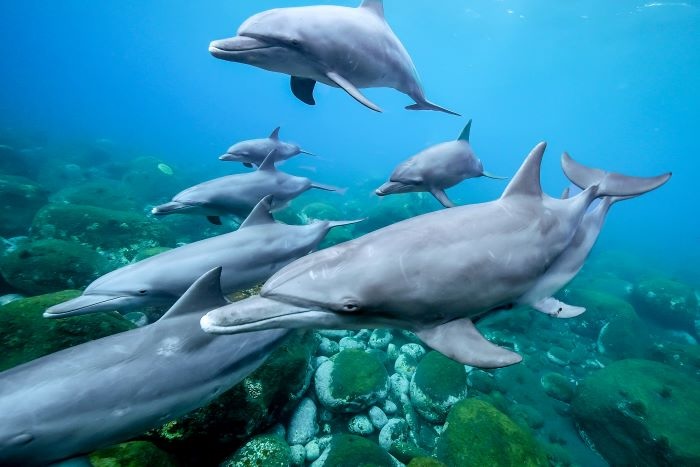
Indo-Pacific bottlenose dolphin (November 15, 2023, Mikura Island) Photo by JUN HASEGAWA
Roughly speaking, dolphins are a general term for "small whales with teeth." Dolphins possess high intelligence and communication abilities, and live in highly socialized groups. They are also known to engage in "play" (activities carried out for free purposes and motivations, separate from the labor and obligations necessary for survival), just like humans.
I believe the greatest appeal of dolphin swimming is that wild dolphins will "play" with humans of their own free will, without any ulterior motives or self-interest.
Types of dolphins you can see in Japan
Here are nine species of dolphins that can be seen relatively consistently in the waters around Japan, often seen during dolphin watching tours. Incidentally, orcas belong to the Delphinidae family, but they are significantly larger than other dolphins and are somewhat different from the typical image of a dolphin, so we will omit them from this explanation.
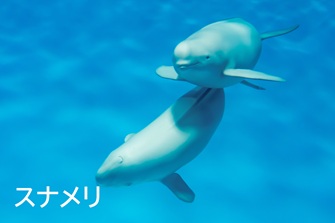
Finless dolphin
This small species lacks a dorsal fin and inhabits coastal areas and estuaries. It is commonly seen in western Japan, including Ise Bay, Toba Port, Nagoya Port, the Seto Inland Sea, and Osaka Bay.
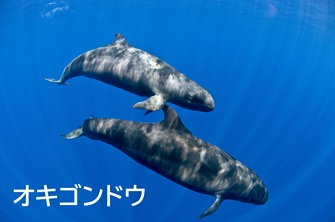
False killer whale
This large species often moves in large groups. It can be seen in Okinawa, the Izu Islands, and off the coast of Sanriku.
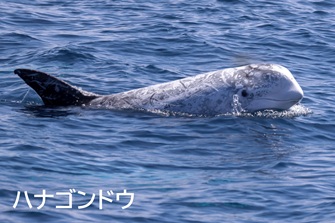
Risso's whale
This large species has a round head and a body shape similar to that of a false killer whale, but is whitish in color. You can see them on dolphin watching tours in East Izu Peninsula.
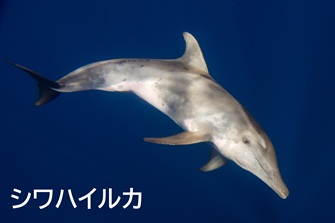
Rough-toed dolphin
This is a medium-sized species with a slender head. Its name comes from the wrinkled, ridged surface on its teeth. It is distributed in the open ocean from Okinawa to the Sanriku(lies on the northeastern side of the island of Honshu) region.
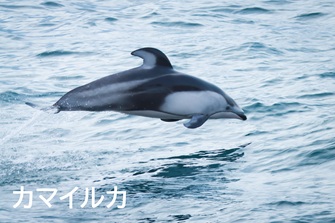
Pacific white-sided dolphin
This small species is distributed throughout the North Pacific. In Mutsu Bay, there's a high probability of encountering them from spring to early summer each year. In winter, they can also be seen on dolphin watching tours in East coast of Izu peninsula.
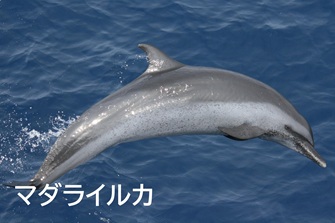
Spotted dolphin
This medium-sized species is widely distributed in warm seas around the world. It is an open-ocean species and can form large schools of several hundred individuals or more. You can encounter them on open-ocean tours around the Ogasawara Islands.
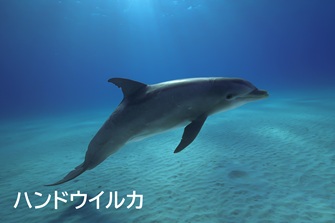
Bottlenose dolphin (Bantou dolphin)
This large species is widely distributed in temperate to tropical seas around the world. Dolphin swimming is possible in places like the Bahamas in Central America. They can also occasionally be spotted on dolphin watching tours in East coast of Izu peninsula. Photo by JUN HASEGAWA
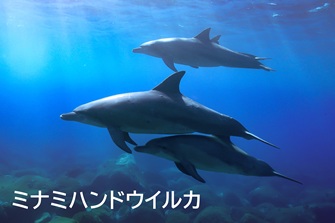
Indo-Pacific bottlenose dolphin
*I will explain this in more detail next time. Photo by JUN HASEGAWA
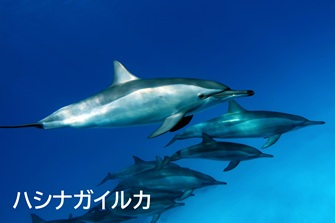
Spinner dolphin
This small species is characterized by its long, slender rostrum. It can be found in warm seas all over the world. It's a popular subject for dolphin watching by boat, as it often jumps and spins in the air.
Video: Spinner dolphins of the Ogasawara Islands
The video above is footage of a spinner dolphin that I filmed in the waters off the Ogasawara Islands (in the Ogasawara Islands, spinner dolphins are generally only observed from boats, but I was given special permission to swim with them for filming purposes).
You can swim with the Indo-Pacific bottlenose dolphin.
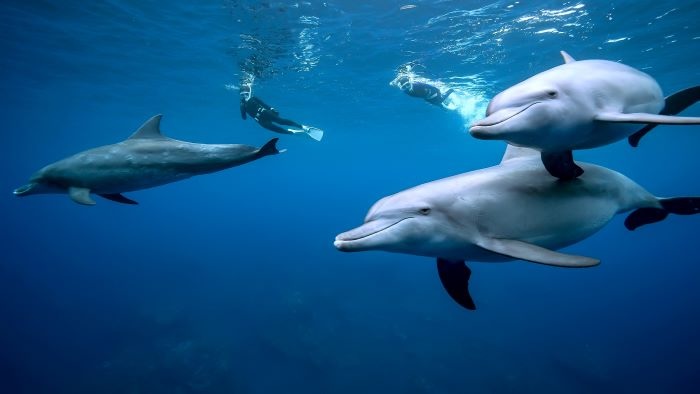
Indo-Pacific bottlenose dolphin (November 4, 2023, Mikura Island) Photo by JUN HASEGAWA
Not all dolphin species are friendly towards humans. Only some species, and even fewer in certain regions, actively swim and play with people. A prime example of such a species is the Indo-Pacific bottlenose dolphin, a medium-sized species that inhabits warm coastal areas from the Indian Ocean to the Western Pacific. In Japan, resident groups have been confirmed in various locations, and watching tours and dolphin swims are offered. Many individuals are curious and not afraid of humans, making them one of the most suitable dolphin species for dolphin swims.
Video: Latest footage of bottlenose dolphins, June 18-19, 2025, Mikurajima Island
This is a video of bottlenose dolphins that I filmed on Mikura Island in June of this year. Dolphins approaching straight ahead, two dolphins approaching while rubbing each other with their pectoral fins, dolphins circling me and making eye contact, and finally, a magnificent group of dolphins approaching! Every scene is thrilling.
Next time, we'll introduce a place where you can swim with wild dolphins. Stay tuned!
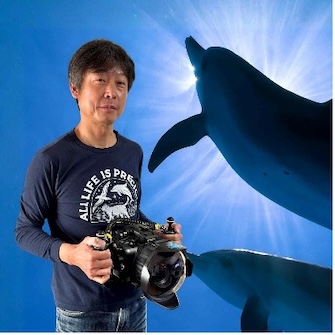
Diving guide and conservationist
JUN HASEGAWA
He is a tour guide at Dive Station Base, a diving shop specializing in freediving and dolphin swimming. His life's work is to convey the beauty and enjoyment of the ocean, as well as environmental issues, using video, photography, and writing. Since his first experience with scuba diving and skin diving in the Ogasawara Islands in 1992, he has been completely captivated by the allure of the sea. In 1997, he began going to Mikura Island for dolphin swimming and became fascinated by the charm of dolphins. At the end of 2022, he retired from the science museum where he had worked for many years and embarked on a career as a diving guide. In 2016, together with dolphin swim guide Yuki Kusachi, he established the "Volunteer Group to Protect Mikura Island's Streaked Shearwaters," and is engaged in activities to capture and rehome feral cats on Mikura Island that prey on birds.