

- HOME
- Swim with wild dolphins in Japan! Vol.2 Swim spots


New series
Swim with wild dolphins in Japan!
Part2 Locations where you can swim with wild dolphins
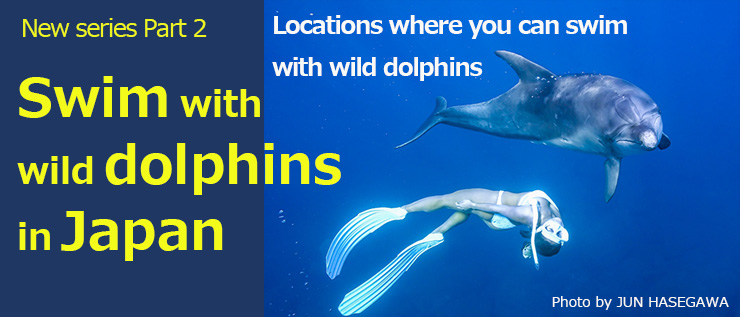
Japan is home to waters where you can swim with wild dolphins. In the second installment of this series, dolphin tour guide Jun Hasegawa carefully and enjoyably introduces the seas of Japan where you can swim with dolphins, using plenty of photos and videos.
※This information is from August 2025.
I'm Jun Hasegawa, a freediving tour guide. " Swimming with wild dolphins, or “dolphin swims,” offers an unforgettable experience unlike any other. In this series, I hope to share with you how to make the most of this amazing experience.
Four locations where you can swim with wild dolphins
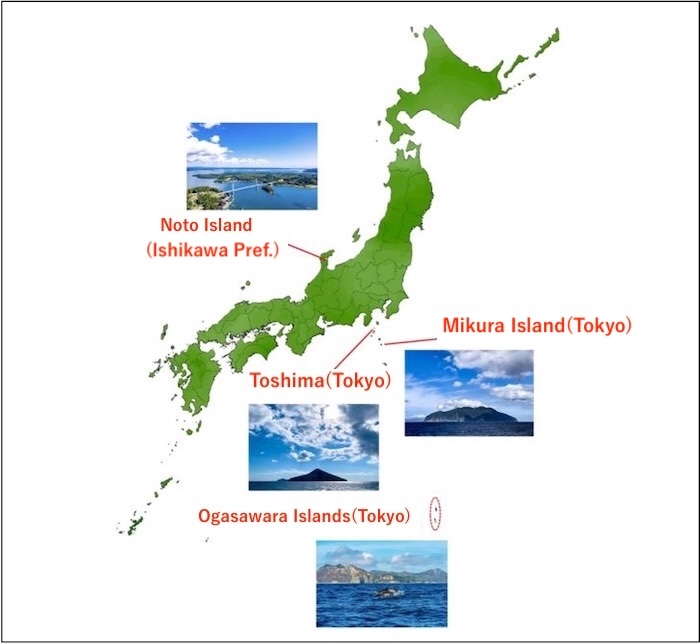
While there are many areas throughout Japan where dolphin watching tours are offered, only four locations—Noto Island (Notojima), Toshima, Mikura Island (Mikurajima), and the Ogasawara Islands—regularly offer tours that allow you "swim" with dolphins.
Noto Island (Ishikawa Prefecture)
Noto Island (Notojima) is an island located in Nanao Bay on the Noto Peninsula. Indo-Pacific bottlenose dolphins have been sighted around the island since 2001, and currently, about 10 to 20 of dolphins live in the waters around the island. Dolphin swimming involves taking a boat to an area where the dolphins are found and swimming with them through snorkeling or freediving. There is no clearly defined season, but April through October is generally considered the most comfortable period for swimming. For information on shops and accommodations that offer dolphin swimming tours, please visit the Notojima Tourism Association website (Japanese Website).
Toshima (Tokyo)
Toshima, located in the northern part of the Izu Islands, has been home to dolphins since 1995, when a female dolphin named “Coco” moved to Toshima from Mikura Island. Since then, other dolphins have followed from Mikura Island, and by the 2020s, approximately 20 dolphins were living in the waters around the island. However, because of the proximity of neighboring islands, the dolphins sometimes move to other areas and may not always be found around Toshima.
Dolphin swims involve traveling by boat around the island in search of dolphins and then swimming with them through snorkeling or freediving. Tours are held from March to November, usually twice a day, with each tour lasting approximately 90 minutes. Find information about Toshima Village here (Japanese Website)!
Mikura Island, a Dolphin Swimming Paradise
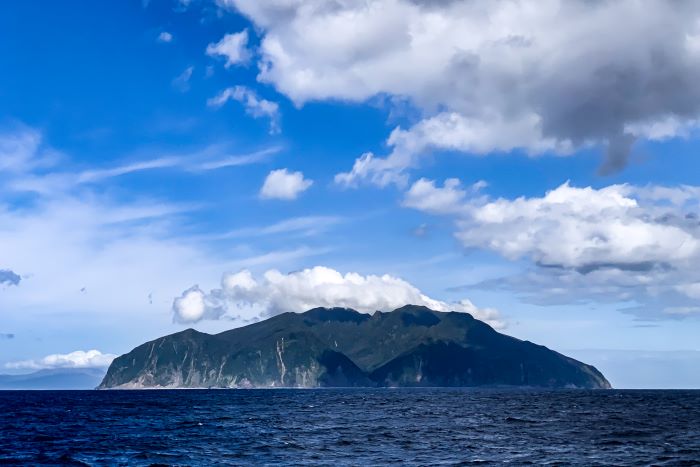
Mikura Island (November 1, 2020)
Photo by JUN HASEGAWA
Mikura Island is located in the Izu Islands, approximately 200 km south of Tokyo. In this chapter, we’ll briefly explain how to get to Mikura Island and introduce the basics of swimming with wild dolphins. By the way, getting to Mikura Island comes with a few “hurdles” to overcome... I’ll tell you all about them in the next chapter!
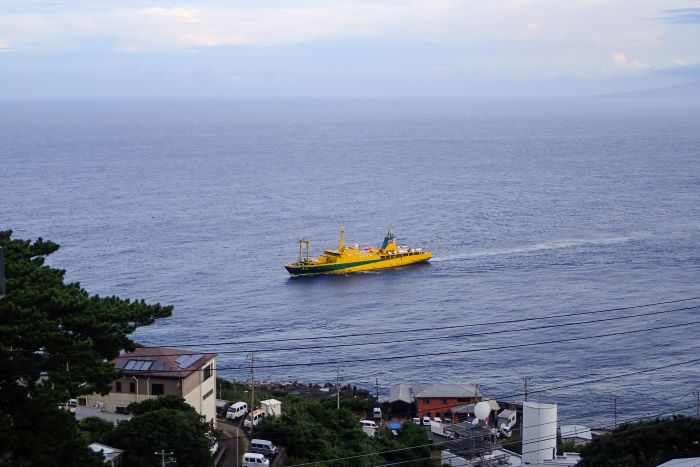
The Tachibana Maru approaching Mikura Island (July 26, 2020, Mikura Island)
Photo by JUN HASEGAWA
The primary way to get to Mikura Island is by boat. You’ll board the large passenger ship “Tachibana Maru” at Takeshiba Pier in Tokyo in the evening and arrive at Mikura Island the following morning. Since day trips are generally not permitted and you’ll need to stay overnight on the island, it’s important to book your accommodation before purchasing your boat ticket. Accommodation options include guesthouses, village-run accommodations, and bungalows managed by the Mikurajima Tourism Association. We also strongly recommend booking your dolphin swim boat at the same time as you book your accommodation.
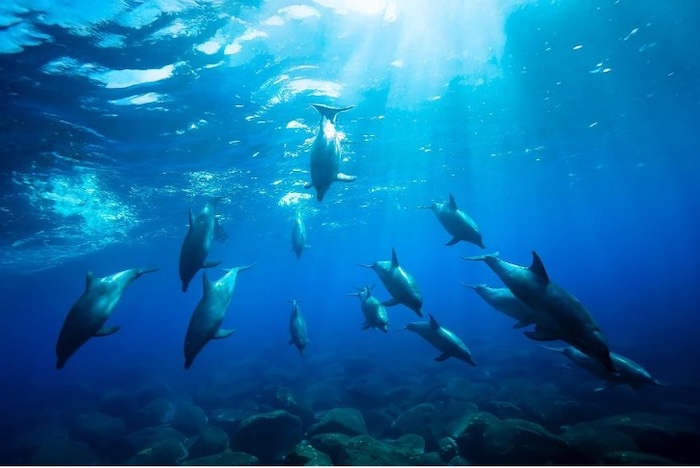
A pod of Indo-Pacific bottlenose dolphins (October 27, 2023, Mikura Island)
Photo by JUN HASEGAWA
Approximately 150 bottlenose dolphins live in the waters around Mikura Island, and dolphin swimming tours began in 1994. These tours involve traveling around the island in small fishing boats in search of dolphins, followed by snorkeling or freediving with them. When sea conditions allow the boat to make a full circuit of the island, encountering dolphins is almost guaranteed. Tours operate from mid-March to mid-November, with two tours per day, each lasting approximately two hours. Please be sure to check the rules for dolphin swimming in advance, as they are in place to protect and conserve the dolphins. For more information, please visit the website of the Mikurajima Tourism Association (Japanese Website).
Ogasawara, the pioneering site for dolphin swimming in Japan
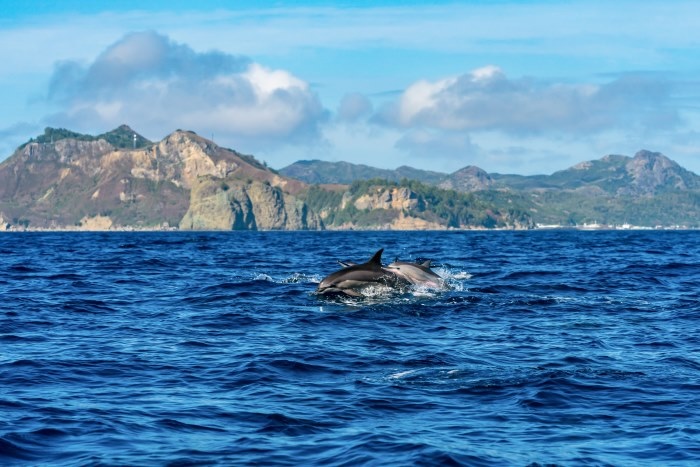
Spinner dolphins off the coast of Chichijima, Ogasawara Islands
The Ogasawara Islands, a UNESCO World Heritage Site, are believed to be one of the first places in Japan where dolphin swimming began. In this chapter, we’ll briefly explain how to get to Ogasawara and introduce the basics of swimming with wild dolphins. By the way, the waters around Ogasawara have much more to offer than dolphins! We’ll explore the many ways to enjoy Ogasawara, including its other marine attractions, in a future article titled “Let’s Go Meet the Dolphins of Ogasawara!”
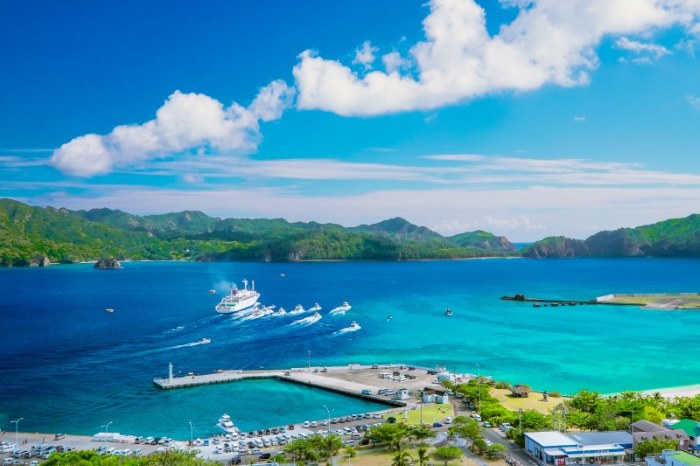
The Ogasawara Maru departing from Futami Port on Chichijima, and ships seeing off their guests.
The Ogasawara Islands are located in the Pacific Ocean, approximately 1,000 km south of central Tokyo. Only Chichijima and Hahajima are inhabited. The main areas for dolphin swimming are around these two inhabited islands, as well as around Yomejima, an uninhabited island located about 50 km north of Chichijima. The only regular passenger service from mainland Japan is the Ogasawara Maru, which takes approximately 24 hours to reach Chichijima from Takeshiba Pier in Tokyo. A variety of accommodations are available, including guesthouses, pensions, condominiums, and hotels.
◎Useful websites for your trip to the Ogasawara Islands:
Ogasawaramura Tourism Association
Ogasawaramura Hahajima Tourism Association, Japanese Website
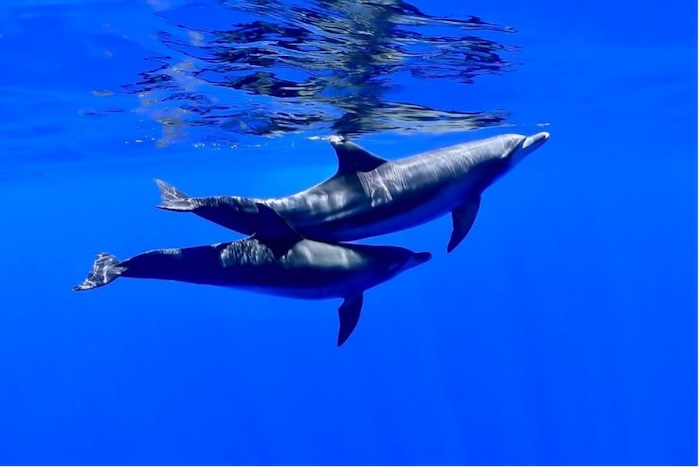
Indo-Pacific bottlenose dolphin (July 6, 2022, off the coast of Minamijima, Ogasawara Islands)
Photo by JUN HASEGAWA
It is estimated that around 200 Indo-Pacific bottlenose dolphins live year-round in the waters around the Ogasawara Islands. It is unclear when dolphin swimming began in Ogasawara, but it was already being offered when I first visited Chichijima in 1992. Based on this, I believe Ogasawara was probably the first place in Japan to offer dolphin swimming as a tourist activity. Dolphin swimming tours typically last either half a day or a full day. They may include a landing on the uninhabited island of Minamijima and snorkeling in a marine park known for its beautiful coral reefs. During the tour, the boat searches for dolphins, and if dolphins are encountered, you can get in the water and swim with them. For more details, please contact the Ogasawara Whale Watching Association.
A summary of seas in Japan where you can see wild dolphins
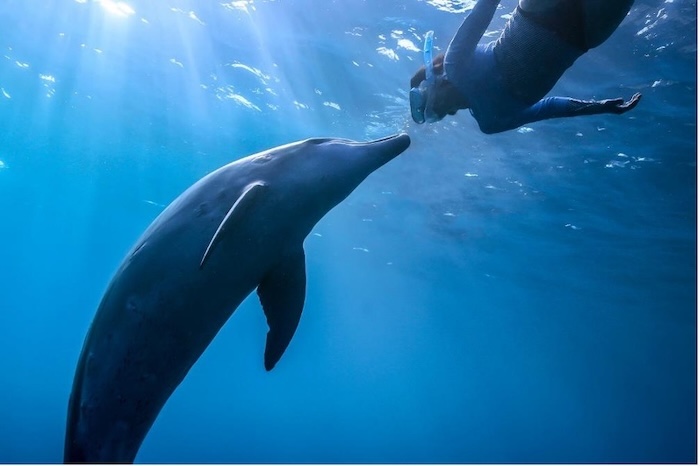
Gazing into the eyes of a dolphin (Mikura Island, September 29, 2023)
Photo by JUN HASEGAWA
The moment when you look into a dolphin’s eyes and feel a connection with them—that’s what I believe brings many repeat dolphin swimmers back, traveling across the vast ocean just to meet these amazing animals. Dolphins are remarkable creatures that sometimes choose to “play” with humans simply because they want to. But whether they feel like playing depends entirely on their mood. Even if you spot a dolphin and get into the water, it might be sleeping, not in the mood to interact, or busy doing something it finds more enjoyable than playing with humans—such as surfing or playing with other dolphins. It may simply swim right past you. That’s why it is such a moving experience when a dolphin approaches you of its own accord, makes eye contact, or circles around you. By learning more about dolphins and developing the skills needed to swim with them, you can increase your chances of having these special encounters. In this series, I’ll introduce specific tips and techniques for swimming and interacting with dolphins. Our next theme is “Let’s Go Meet the Dolphins of Mikura Island!” Stay tuned!
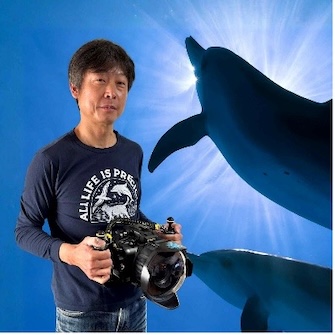
Diving guide and conservationist
JUN HASEGAWA
He is a tour guide at Dive Station Base, a diving shop specializing in freediving and dolphin swimming. His life's work is to convey the beauty and enjoyment of the ocean, as well as environmental issues, using video, photography, and writing. Since his first experience with scuba diving and skin diving in the Ogasawara Islands in 1992, he has been completely captivated by the allure of the sea. In 1997, he began going to Mikura Island for dolphin swimming and became fascinated by the charm of dolphins. At the end of 2022, he retired from the science museum where he had worked for many years and embarked on a career as a diving guide. In 2016, together with dolphin swim guide Yuki Kusachi, he established the "Volunteer Group to Protect Mikura Island's Streaked Shearwaters," and is engaged in activities to capture and rehome feral cats on Mikura Island that prey on birds.
>>Swim with Wild Dolphins Tour by Dive Station Base